Size guide
What Size Dumpster Do You Need?
Most cleanouts and small jobs fit a 10- or 15-yard. Most kitchen remodels and roofs fit a 20-yard. Additions and big builds need a 30-yard. Heavy debris like concrete and dirt goes only in the 10- or 15-yard, because weight fills a dumpster before space does.
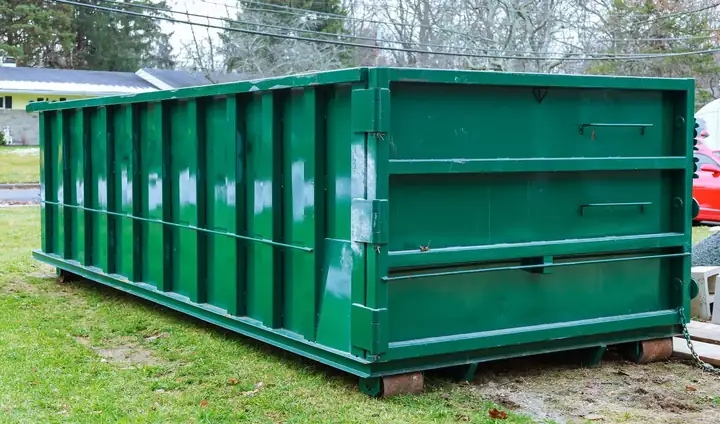
Which dumpster size fits your project?
The right dumpster size comes from three things: the project, how much debris it makes, and whether the debris is heavy. Answer those three questions below. The picker suggests a size, and the table under it shows the same rules in writing, so you can check the logic yourself.
Size picker: 3 quick questions
| Project | One room or garage bay | Several rooms or a small roof | Whole house or big roof |
|---|---|---|---|
| Cleanout or move | 10-yard | 15-yard | 20-yard |
| Bathroom remodel | 10-yard | 10-yard | 15-yard |
| Kitchen remodel | 15-yard | 20-yard | 20-yard |
| Roof tear-off | 15-yard | 20-yard | 30-yard |
| Construction or addition | 20-yard | 30-yard | 30-yard |
| Demolition or new build | 30-yard | 40-yard | 40-yard |
| Concrete, dirt, brick (heavy) | 10-yard | 15-yard | 15-yard, more than one haul |
Assumptions: debris is broken down and packed flat; shingles weigh about 240 lb per square (80 lb bundles, 3 per square); heavy debris fills only halfway up the walls. These are starting points, not guarantees. A quick call confirms the size before delivery.
Tearing down a whole structure, or a large commercial build? Start with the 40-yard dumpster.
How do the five roll-off dumpster sizes compare?
The five roll-off sizes run from the 10-yard dumpster (12 × 8 × 3.5 ft, 2 tons) to the 40-yard dumpster (about 22 × 7.5 × 8 ft, holding about 5 to 6 tons). The 10- to 30-yard sizes include 7 days and 2 to 4 tons. The 40-yard has its included weight and days set on your quote.
| Size | Outside L × W × H | Pickup loads* | Weight included | Rental | Best for |
|---|---|---|---|---|---|
| 10-yard | 12 ft × 8 ft × 3.5 ft | about 4 | 2 tons | 7 days | Concrete, dirt, small bathroom remodels |
| 15-yard | 16 ft × 7.5 ft × 4.5 ft | about 6 | 2.5 tons | 7 days | Garage cleanouts, small roof replacements |
| 20-yard | 22 ft × 8 ft × 4 ft | about 8 | 3 tons | 7 days | Whole-house decluttering, kitchen remodels |
| 30-yard | 22 ft × 8 ft × 6 ft | about 12 | 4 tons | 7 days | Large construction sites, home additions |
| 40-yard | 22 ft × 7.5 ft × 8 ft | about 12 to 16 | On your quote (holds about 5–6 tons) | On your quote | Major demolitions, new construction, large commercial projects |
*One pickup load = an 8-ft truck bed filled level, about 2.5 cubic yards. Every size includes delivery and pickup; the 10- to 30-yard include 7 days, and the 40-yard's days and tons are set on your quote. Weight over the included tons is $75 per ton, charged by the exact pound. Concrete, dirt and brick go only in the 10- and 15-yard. How weight is billed.
Open the page for a size to see project examples, weight math and driveway fit: 10-yard, 15-yard, 20-yard, 30-yard or 40-yard.
Not sure which size? Tell us the job. We size it on the call.
Call now(325) 241-7006What is a cubic yard of debris?
A cubic yard is a block 3 feet long, 3 feet wide and 3 feet tall, or 27 cubic feet. A 20-yard dumpster holds 20 of those blocks. Loose debris with air gaps takes more room than solid pieces, so break items down before loading.
The yard number names the volume, not the outside size. That's why the 20-yard and 30-yard have the same footprint: the 30-yard simply has walls 2 feet taller.
To estimate your own volume, measure a pile in feet, multiply length × width × height, and divide by 27. A pile 9 ft long, 6 ft wide and 3 ft tall is 162 cubic feet, or 6 cubic yards.
How many pickup-truck loads fit in each dumpster?
A 10-yard dumpster holds about 4 pickup loads, a 15-yard about 6, a 20-yard about 8, a 30-yard about 12 and a 40-yard about 12 to 16. Those counts assume an 8-foot truck bed filled level with the sides, which is about 2.5 cubic yards per load.
| Size | Cubic yards | Pickup loads | Weight included |
|---|---|---|---|
| 10-yard | 10 | About 4 | 2 tons |
| 15-yard | 15 | About 6 | 2.5 tons |
| 20-yard | 20 | About 8 | 3 tons |
| 30-yard | 30 | About 12 | 4 tons |
| 40-yard | 40 | About 12 to 16 | Set on your quote (holds about 5–6 tons) |
A short-bed truck (about 6.5 ft) holds less, so count more loads if that's what you drive.
Should you size up or down when you're not sure?
Size up for light, bulky debris such as furniture, drywall and cabinets, because a swap is billed as a whole second rental. Size down for heavy debris such as concrete and dirt, because weight, not space, sets the limit, and those loads only go in the 10- and 15-yard dumpsters.
The cost of guessing wrong runs in two directions:
- Too small: the dumpster fills before the job ends and you pay for a swap, which is a new standard rental.
- Too big: you pay the price difference between two sizes for space you don't use.
- Too heavy: any size can go over its included tons. Extra weight is $75 per ton, by the pound. See how dumpster weight is billed.
Describe the job and we'll tell you the size on the phone.
Call (325) 241-7006Why does weight matter as much as size?
Weight matters because every dumpster rental includes a set weight, from 2 tons in a 10-yard to 4 tons in a 30-yard, and the landfill scale weighs every load. Dense debris like concrete, shingles and tile reaches the ton limit long before the dumpster looks full.
That is the reason for our heavy-debris rule: concrete, dirt, brick and sand go only in the 10- and 15-yard dumpsters, loaded no higher than halfway. Texas highway weight limits apply to the truck, not just the bill.
Before you book, check the material rules on the concrete and dirt dumpster page and the list of what can go in a dumpster.
Dumpster size questions
What is the most common dumpster size for home projects?
The 20-yard dumpster covers the widest range of home projects, from kitchen remodels to single-layer roofs. Smaller jobs and heavy debris fit the 10- or 15-yard better.
Are dumpster sizes measured inside or outside?
The dimensions on this page are outside measurements, which is what matters for your driveway. The yard number describes the volume the box holds.
Can I fill a dumpster above the top?
Debris must stay level with the top rim. Texas law doesn't allow an overloaded box on the road, so an overfilled dumpster triggers a dry-run fee and the extra has to come out before pickup.
Do bigger dumpsters cost much more?
Each size has its own flat-rate base price, and the gap between sizes is usually smaller than the cost of a swap. Call for this week's prices for the two sizes you're weighing.
When is a 40-yard better than swapping a 30-yard?
A 40-yard saves a swap when bulky, light debris would fill a 30-yard more than once, as on a whole-structure demolition. For dense debris, a 30-yard with its 4 tons included is often the better buy. See the 40-yard dumpster.
Still not sure which size?
Tell us the project and roughly how much is coming out. We'll pick the size with you and quote the full price before delivery.
Deliveries 7:00 AM to 5:00 PM. Book by 3:00 PM for next-day delivery.